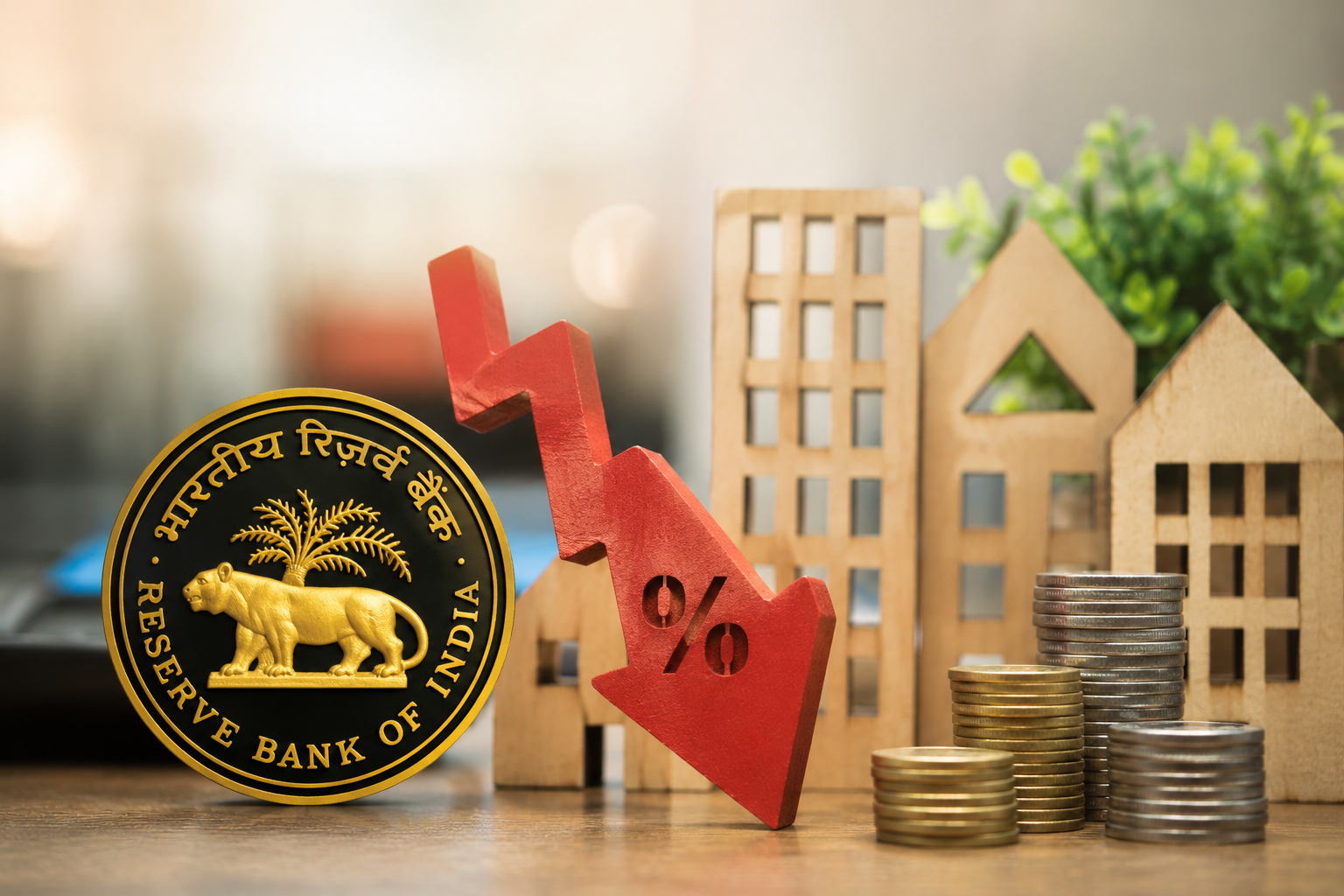
The Reserve Bank of India's Monetary Policy Committee minutes, released on Thursday, have sent a clear signal to markets: a rate cut in August 2026 is no longer a distant possibility — it may well be the base case.
What's Driving the Banking Market Today?
The release of the June 2026 MPC meeting minutes has injected fresh optimism into Indian financial markets. Multiple MPC members flagged easing inflationary pressures, with retail inflation (CPI) now comfortably within the RBI's 2–6% target band, hovering near 3.8% — the lowest level in over two years. Two members explicitly noted that the current policy stance could be "further accommodated" if incoming data remains supportive, a phrase markets have interpreted as a green light for an August rate cut.
The Nifty 50 responded positively, gaining around 0.6% to trade near 25,480 levels in Thursday's session, while the Sensex climbed past 83,600. The rate-sensitive Nifty Bank index outperformed, rising nearly 1.1%, as investors began pricing in lower borrowing costs ahead. The 10-year government bond yield slipped to around 6.72%, its lowest in several months, reflecting market conviction that monetary easing is back on the table.
Adding to the dovish mood, the rupee held steady near ₹83.60 per US dollar, supported by continued foreign institutional investor (FII) inflows into Indian debt markets. Brent crude oil trading near $82 per barrel — well off its earlier 2026 highs — has also reduced imported inflation fears, giving the RBI additional headroom to act.
Impact on Indian Markets
A rate cut, if delivered in August, would be the second in the current easing cycle, following the 25 basis point reduction in June 2026. Cumulatively, a 50 bps cut since the cycle began would bring the repo rate down to 5.75% — a level last seen during the post-pandemic recovery phase. For stock investment in rate-sensitive sectors, this is a meaningful catalyst.
FII flows into Indian equities have been robust, with net inflows of approximately ₹8,200 crore recorded in the first two weeks of July 2026. Domestic institutional investors (DIIs) have also remained active buyers, providing a solid floor to markets even on volatile days. The broader mid-cap and small-cap indices have mirrored the optimism, with the Nifty Midcap 100 touching fresh 52-week highs earlier this week.
Bond markets are celebrating even louder. Debt mutual fund managers and treasury desks at banks are seeing capital appreciation on longer-duration holdings as yields soften. Those who open demat account holders with access to bond ETFs or gilt funds may find this an opportune entry window before the next rate action.

Stocks and Sectors in Focus
The sectors most likely to benefit from a rate cut environment are well-established — but worth revisiting given the fresh policy signal:
- Banking and NBFCs: State Bank of India (SBI), HDFC Bank, and Bajaj Finance are the bellwether names. Lower rates compress net interest margins in the short term but drive loan growth and asset quality improvement over time. SBI has already gained nearly 2% this week.
- Real Estate: DLF, Godrej Properties, and Prestige Estates stand to benefit significantly. Residential demand is highly sensitive to home loan rates, and a 25–50 bps cut can meaningfully improve affordability for first-time homebuyers.
- Automobiles: Maruti Suzuki, Mahindra & Mahindra, and Bajaj Auto benefit as vehicle finance becomes cheaper, stimulating both retail and commercial vehicle demand.
- Infrastructure and Capital Goods: L&T and KEC International gain as project financing costs ease, improving the economics of long-gestation infrastructure projects.
Investors accessing markets through a reliable trading platform should watch for sector rotation away from defensive plays like IT and FMCG toward cyclicals and financials in the weeks ahead.
What Should Investors Do?
History offers useful perspective. During the 2019–20 rate cut cycle, when the RBI cut rates by a cumulative 135 bps over 14 months, the Nifty Bank index outperformed the broader Nifty 50 by nearly 12 percentage points over a 12-month horizon. Real estate stocks saw even sharper re-ratings. That said, the macro backdrop then included a global growth slowdown — today's context is different, with India's GDP growth tracking near 7%.
For retail investors, the playbook in a rate cut environment typically involves:
- Gradually increasing allocation to rate-sensitive sectors (banking, realty, autos) through SIPs or systematic lump-sum investing.
- Considering longer-duration debt funds or gilt funds to capitalise on bond price appreciation as yields fall.
- Avoiding overleveraged companies where near-term earnings may still be pressured despite lower rates.
Risks to Keep in Mind
Not everything is uniformly bullish. A sharp rebound in crude oil prices — driven by geopolitical flare-ups or OPEC+ supply cuts — could reignite inflation and force the RBI to pause. Similarly, if the US Federal Reserve shifts back to a hawkish stance, FII outflows from emerging markets including India could weaken the rupee and complicate the RBI's rate calculus. SEBI's ongoing scrutiny of certain mid-cap and small-cap valuations also warrants caution for momentum-driven investors.
Key Takeaways
- RBI MPC minutes strongly hint at an August 2026 rate cut, likely 25 bps, taking the repo rate to 5.75%.
- Nifty Bank and Nifty Realty indices are outperforming on Thursday as markets price in easing; bond yields are softening.
- Sectors to watch: banking (SBI, HDFC Bank), real estate (DLF), autos (Maruti, M&M), and NBFCs (Bajaj Finance).
- FII inflows into both equity and debt are supportive, and the rupee remains stable — reinforcing the bullish macro backdrop.
- Risks include a crude oil spike, Fed policy reversal, or inflation surprise that could delay or derail the cut.
This article is for informational purposes only and does not constitute investment advice.