
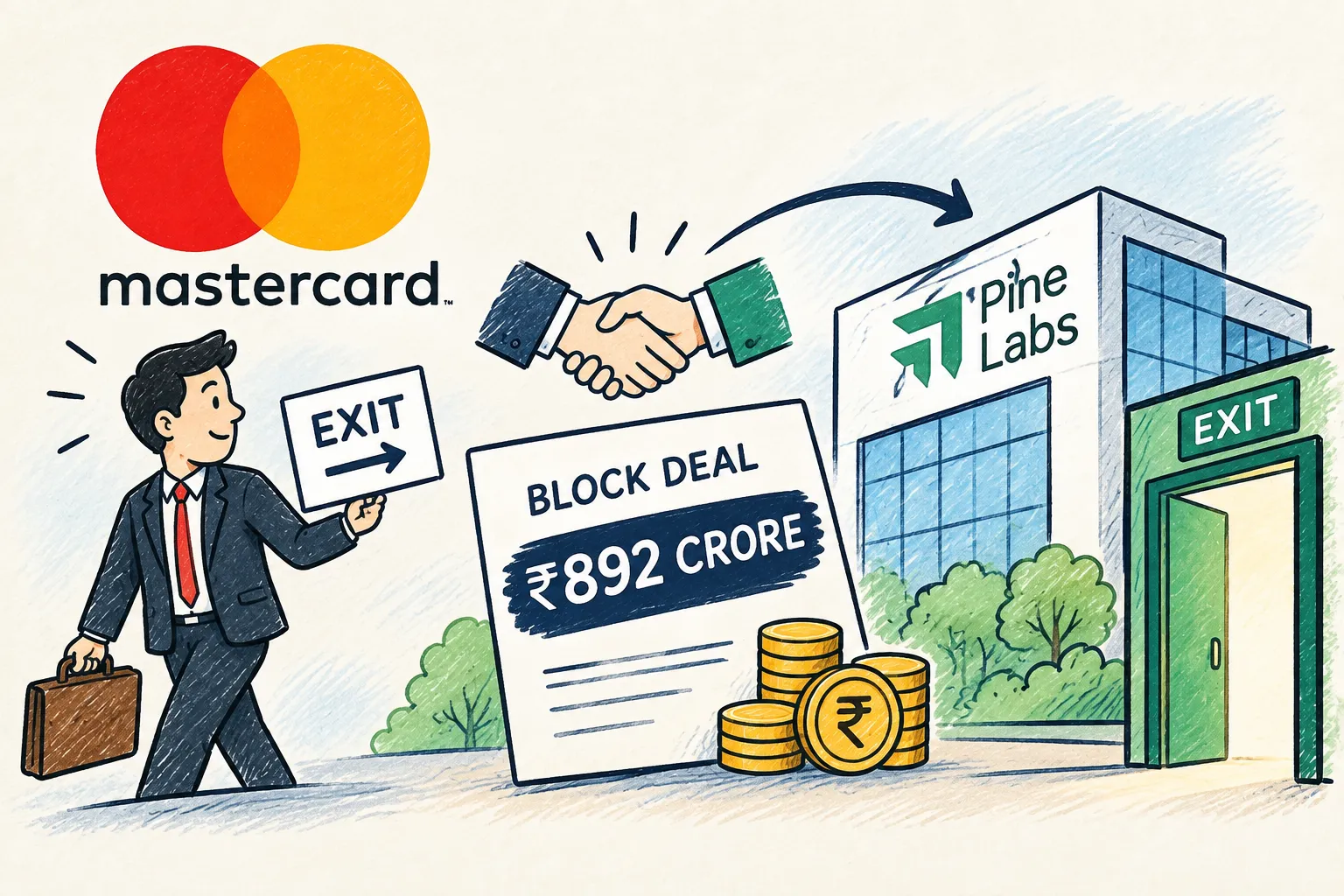
Mastercard Asia Pacific is set to sell its entire 4.31 percent stake in Pine Labs through a block deal worth up to Rs 892.5 crore, at a floor price of Rs 179.50 a share, according to multiple market reports on September 22.
The Stake Sale Explained
Mastercard Asia Pacific plans to offload its full 4.31 percent holding in Pine Labs, the Noida based merchant payments company, through a single block deal on the stock exchanges. The transaction involves up to 49.7 million shares and is valued at as much as Rs 892.5 crore at the floor price of Rs 179.50 per share. That floor price sits about 7.3 percent below Pine Labs' previous closing price on the NSE, a discount typical of large block trades designed to attract buyers for a sizeable block in one transaction.
Pine Labs shares were expected to be in focus in Tuesday's trading session as the market digested the news, though the final execution price, the actual discount applied, and whether the entire stake gets placed in one go depend on how the book builds during the transaction window.
Why Mastercard Is Exiting
Mastercard has been one of Pine Labs' longstanding financial backers, alongside PayPal, Peak XV Partners and Temasek, and held onto part of its position even after selling shares in Pine Labs' initial public offering in November 2025. A full exit now would end that relationship entirely, at a point when Pine Labs has posted stronger quarterly numbers than it did around the time of its listing.
For its first quarter of the current financial year, Pine Labs reported revenue growth of 19.6 percent along with an expansion in its EBITDA margin to 12.9 percent. Improving profitability at the company level can make an exit more attractive for an early investor, since a stronger operating base tends to support a better realisation price than a sale during weak performance would.
Pine Labs' Listing Background
Pine Labs debuted on Indian exchanges in November 2025 after raising Rs 3,900 crore through its IPO, comprising a fresh issue of Rs 2,080 crore and an offer for sale of Rs 1,820 crore. The stock rose 14 percent over its issue price on listing day, climbing as high as 28.5 percent intraday before settling higher, giving the company a market value of roughly Rs 28,937 crore at the close of its first trading session.

That IPO itself had drawn only a modest 2.5 times subscription overall, with the institutional portion subscribed four times and the high net worth individual segment left undersubscribed at 0.3 times, reflecting broader investor caution around new age technology listings at the time. Mastercard, along with other pre-IPO investors including Peak XV Partners, Actis, PayPal and Sofina Ventures, sold part of its holding as part of that offer for sale.
What a Full Exit Could Mean
| Detail | Figure |
| Stake being sold | 4.31 percent |
| Shares involved | Up to 49.7 million |
| Deal value | Up to Rs 892.5 crore |
| Floor price | Rs 179.50 a share |
| Discount to previous close | About 7.3 percent |
A complete Mastercard exit removes one of Pine Labs' original strategic and financial backers from the shareholder register. That can occasionally open room for new institutional or strategic investors to build a position, though it can also simply reflect portfolio housekeeping by a large global card network realising returns after the company's public listing.
Also Read: NSE IPO Closes With 5.69x Demand, Listing Set for Sep 24
Investor Takeaway
Block deals of this kind are common once IPO lock in restrictions ease or strategic investors decide the time is right to book gains, and they do not necessarily signal anything negative about the underlying business. Pine Labs' own operating performance, with revenue growth accelerating and margins improving in the most recent quarter, points to a company in a healthier position than at the time of its debut.
Whether the block deal is fully subscribed at the floor price, priced at a narrower discount, or executed in tranches will only become clear once the transaction is completed and reported to the exchanges. Investors tracking the counter should watch official exchange disclosures for the final execution details rather than earlier estimates.