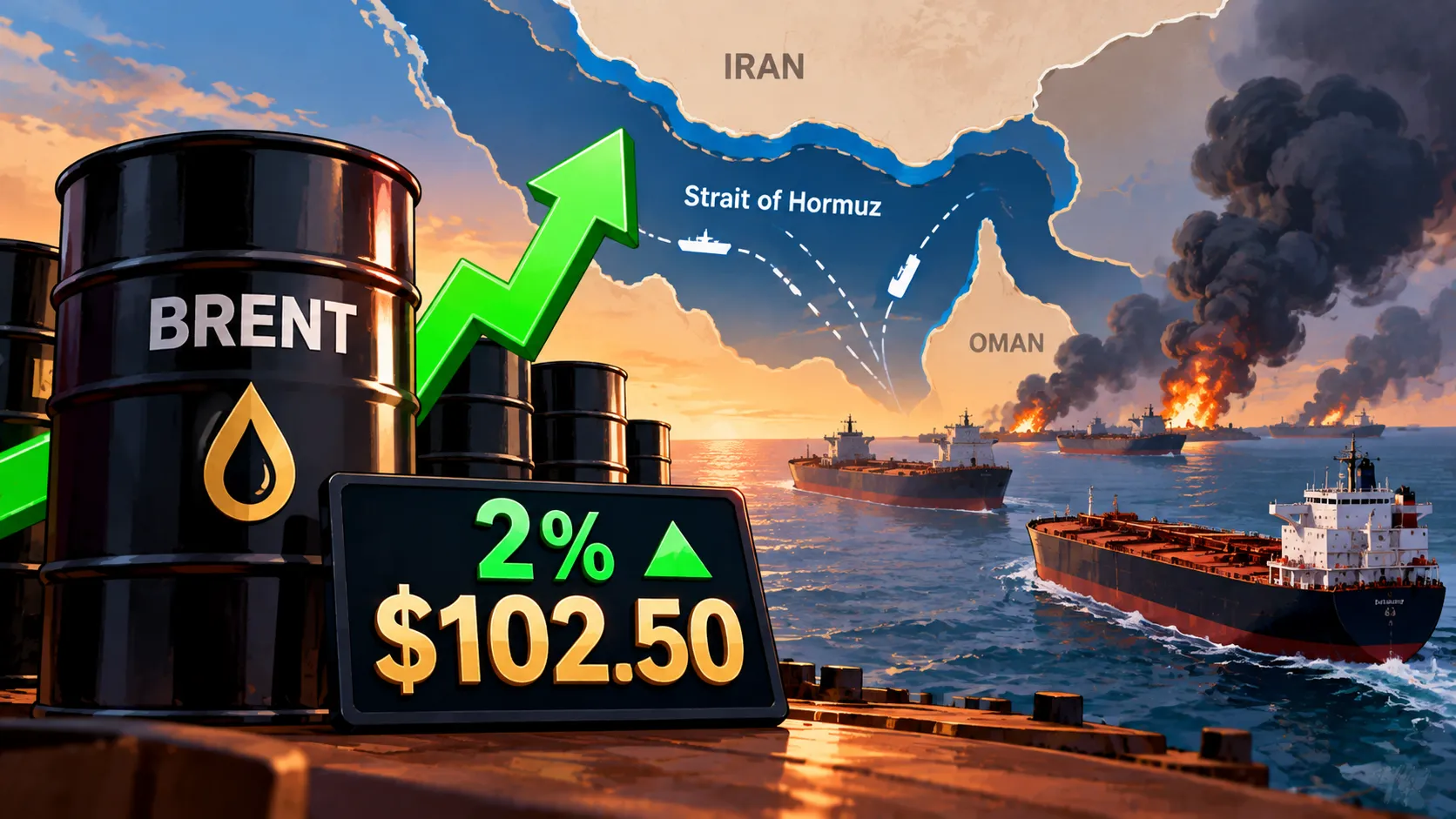
Brent crude rose more than 2% to $102.50 a barrel on Thursday, October 8, 2026, as Iranian attacks on tankers in the Strait of Hormuz increased and Gulf of Mexico producers shut output ahead of a storm.
Where Oil Traded on Thursday
Brent crude was trading at $102.50 per barrel, up more than 2% from Wednesday's close, while West Texas Intermediate, the main US benchmark, was at $89.96, up 1.9%. The jump came after a quieter patch earlier in the week, when prices had eased on news about a planned release of emergency oil stocks.
| Benchmark | Wednesday, October 7 | Thursday, October 8 |
| Brent (December futures) | About $101.41 (early rise of 83 cents) | $102.50 (up more than 2%) |
| West Texas Intermediate | About $89.82 (early rise of 38 cents) | $89.96 (up 1.9%) |
Oil had already been above $100 on Wednesday, when attacks tied to Yemen's Houthis on Saudi targets revived worries about Middle East supply, according to market reports. Thursday's move added to those gains.
The Tanker Attacks Behind the Rally
Data from a US Navy-led information outlet showed a dozen attacks on tankers between September 28 and October 2 alone, Reuters reported. Another Reuters report said attacks on tankers in Hormuz hit their highest weekly level since the start of the Iran war. Tanker traffic through the waterway has dropped sharply again, with flows on Tuesday the lowest since late July, according to ship-tracking firm Kpler.
ANZ analyst Daniel Hynes told Reuters that producers now appear willing to accept the risk of vessels being damaged, because they have no other way to get their oil to international markets. The point matters because it suggests exports are still moving, but at a higher risk premium. Analysts have estimated that the Strait of Hormuz and the Bab el-Mandeb Strait together carry roughly a quarter of the world's oil supply, which is why even partial disruption at either point moves prices.
A second pressure came from the United States. Gulf of Mexico field operators began shutting in production ahead of a potential hurricane, which removes some US supply from the market for the duration of the storm.

The Supply Cushions in Play
Several factors have limited a bigger spike. Saudi Energy Minister Prince Abdulaziz bin Salman said on Tuesday that the kingdom's East-West pipeline was carrying 5.8 million barrels per day again, giving Saudi Arabia an export route that bypasses Hormuz. A separate Saudi aviation regulator statement said airports in Jazan and Najran were struck in attacks, which shows that the Houthi conflict continues alongside the restored flows.
The Group of Seven has also agreed on a release of 100 million barrels of crude and fuels from strategic stocks, and the International Energy Agency said earlier this week it would soon decide how to begin it. Some observers note that the release is part of a plan announced in March for about 400 million barrels, so markets had largely priced it in already. That helps explain why the news did not hold prices down for long.
Why Indian Investors Are Watching Crude
India is a large net importer of crude oil, so a higher Brent price raises the country's import bill and feeds directly into the inflation numbers that policymakers track. On Wednesday, the Reserve Bank of India raised its repo rate by 25 basis points to 5.5% and cited elevated oil prices among its concerns. It projects consumer price inflation of 6.0% in the third quarter of FY27, up from 4.8% in August.
Indian equities also reacted on Thursday. The BSE Sensex fell 264.97 points to 72,408.15 and the NSE Nifty dropped 87.50 points to 22,507.65 in early trade, as higher crude prices, tighter monetary conditions and foreign fund outflows weighed on sentiment, according to ETV Bharat. Later in the morning, Business Standard reported the Sensex down about 600 points with the Nifty below 22,400 and Brent up around 2%.
Three things will shape the next move in oil prices: whether tanker attacks in Hormuz continue at the recent pace, how the storm affects output in the Gulf of Mexico, and the timing of the G7 stock release. Each of them bears on the inflation path the RBI is now trying to manage, which is why crude has become one of the most watched numbers for Indian markets this week.