
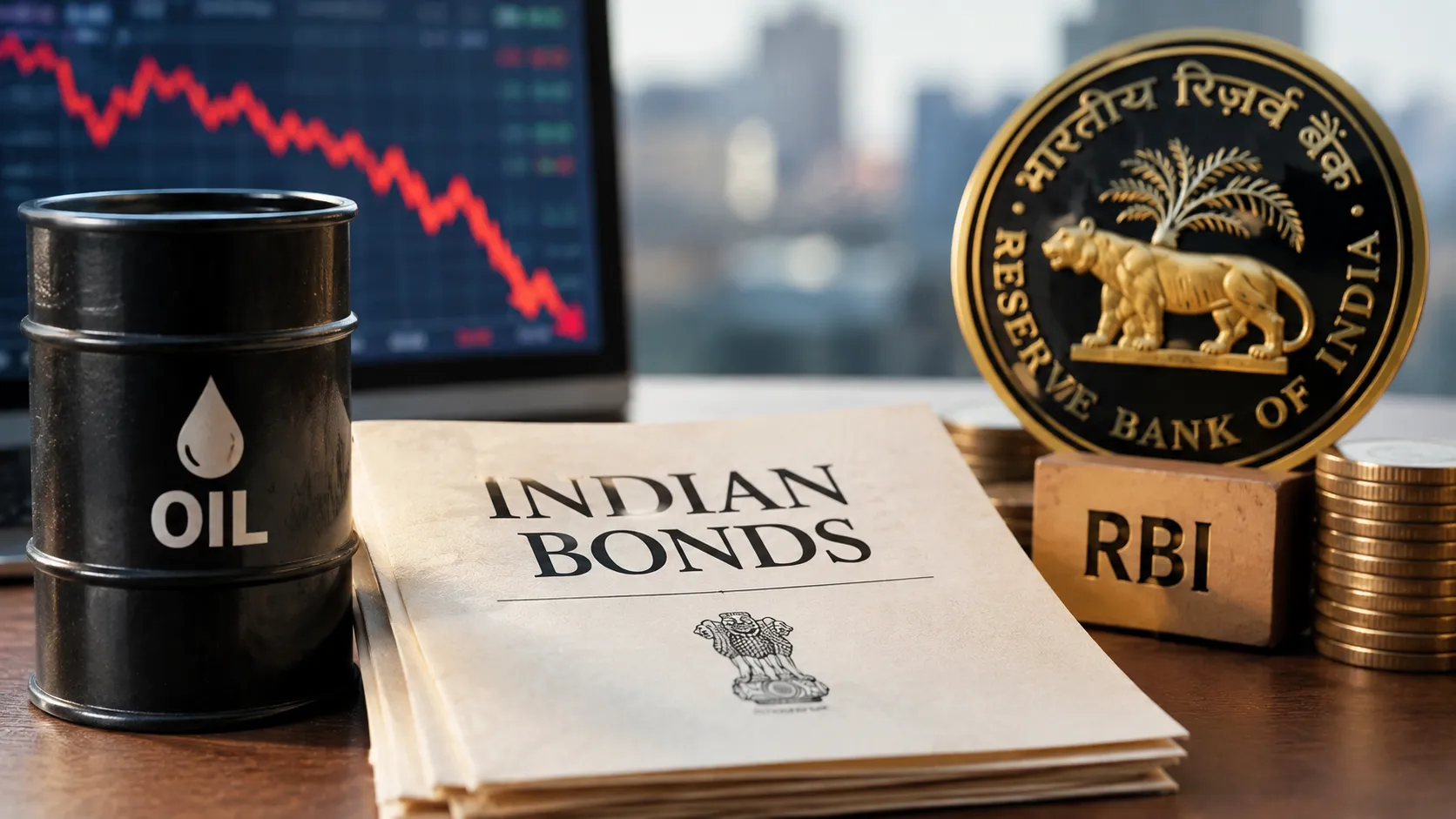
Indian government bonds came under significant pressure in early trade on Tuesday, August 18, 2026, as two major forces hit market sentiment at the same time. Oil prices climbed above $90 a barrel in Asian trade, while the Reserve Bank of India confirmed it would shut down a zero-cost foreign currency swap facility ahead of its original schedule. Together, these developments pushed bond yields sharply higher and unsettled traders across the curve, marking a difficult start to the week for India's debt markets.
Bond yields move inversely to prices, which means that the rise in yields seen on Tuesday directly reflects a fall in the value of bonds. Investors and traders were left navigating a market that had lost two key pillars of support within a matter of days.
Benchmark Yield Climbs for the Second Day Running
The yield on the benchmark 6.94 per cent 2036 bond rose 3 basis points to 6.8407 per cent by 10:45 a.m. IST on Tuesday. This came after a steep 5 basis point jump on Monday, which was the single sharpest one-day rise in over a month. The five-year note bore the heaviest burden on the yield curve, with its yield climbing 8 basis points on Monday and a further 3.5 basis points on Tuesday, reaching 6.4680 per cent.
The consecutive days of selling pressure underlined how quickly market conditions had shifted. What had been a relatively stable period for Indian bonds was giving way to renewed volatility driven by external and domestic factors alike.
RBI Closes FCNR Swap Window a Full Month Before Schedule
The Reserve Bank of India announced last week that it would close a zero-cost swap facility one month ahead of its originally planned end date. The facility had been launched in June to offer banks a hedging mechanism for foreign currency deposits from non-resident Indians, widely known as FCNR deposits. The scheme drew in better-than-expected inflows that exceeded $50 billion in total, which prompted the central bank to bring forward the closure date.
Analysts noted that policymakers were also mindful of the domestic liquidity effects and the fundraising costs tied to the scheme. By winding down the facility early, the RBI has removed a meaningful source of demand from specific corners of the bond market, leaving those segments more exposed to broader market forces.
Liquidity That Backed the Five to Ten Year Curve Is Fading
Since June, the inflows linked to the FCNR swap facility had been providing consistent support to particular segments of the bond market. A private-bank trader explained that liquidity from those inflows had been directed into the five-to-six year part of the curve as well as the liquid 10-year bond. With the swap facility now winding down, that source of buying interest is steadily disappearing.

The same trader pointed out that without this cushion, the market is now far more exposed to swings in oil prices and movements in global interest rates. This change in liquidity conditions has added a fresh layer of nervousness among bond investors who had grown accustomed to a more supportive backdrop over recent months.
Oil Surge Past $90 Deepens Fears Over Inflation and Deficit
Brent crude surpassed $90 a barrel in Asian trade on Tuesday for the first time in nearly three weeks. The rise followed the expiry of a 60-day ceasefire between the United States and Iran on Monday, with neither side indicating any intention to renew it. India, as the world's third-largest oil importer, is particularly sensitive to increases in crude prices. Higher oil costs raise concerns about inflation and the fiscal deficit, both of which are negative signals for bond markets.
The RBI's measures introduced in June had helped shield the bond market from some of the impact of rising oil prices during that period. With those measures now being pulled back, the market finds itself more directly exposed to global energy price volatility at a time when geopolitical tensions are running high.
Swap Rates Jump and State Bond Auction Looms Large
India's overnight index swap rates rose sharply on Tuesday, pointing to strong paying interest and a clear worsening of sentiment across the market. The one-year swap rate climbed 5.5 basis points to 5.8350 per cent. The two-year rate jumped 6.5 basis points to 6.06 per cent. The liquid five-year swap rate surged 9 basis points to 6.4250 per cent, reflecting how broadly the sell-off had spread.
Market participants are now closely watching a planned state government debt auction worth 202 billion rupees. The sale is expected to serve as an important test of investor appetite for Indian bonds in the current environment, where rising oil prices and reduced central bank liquidity support have combined to create a more challenging backdrop for fixed income markets.