
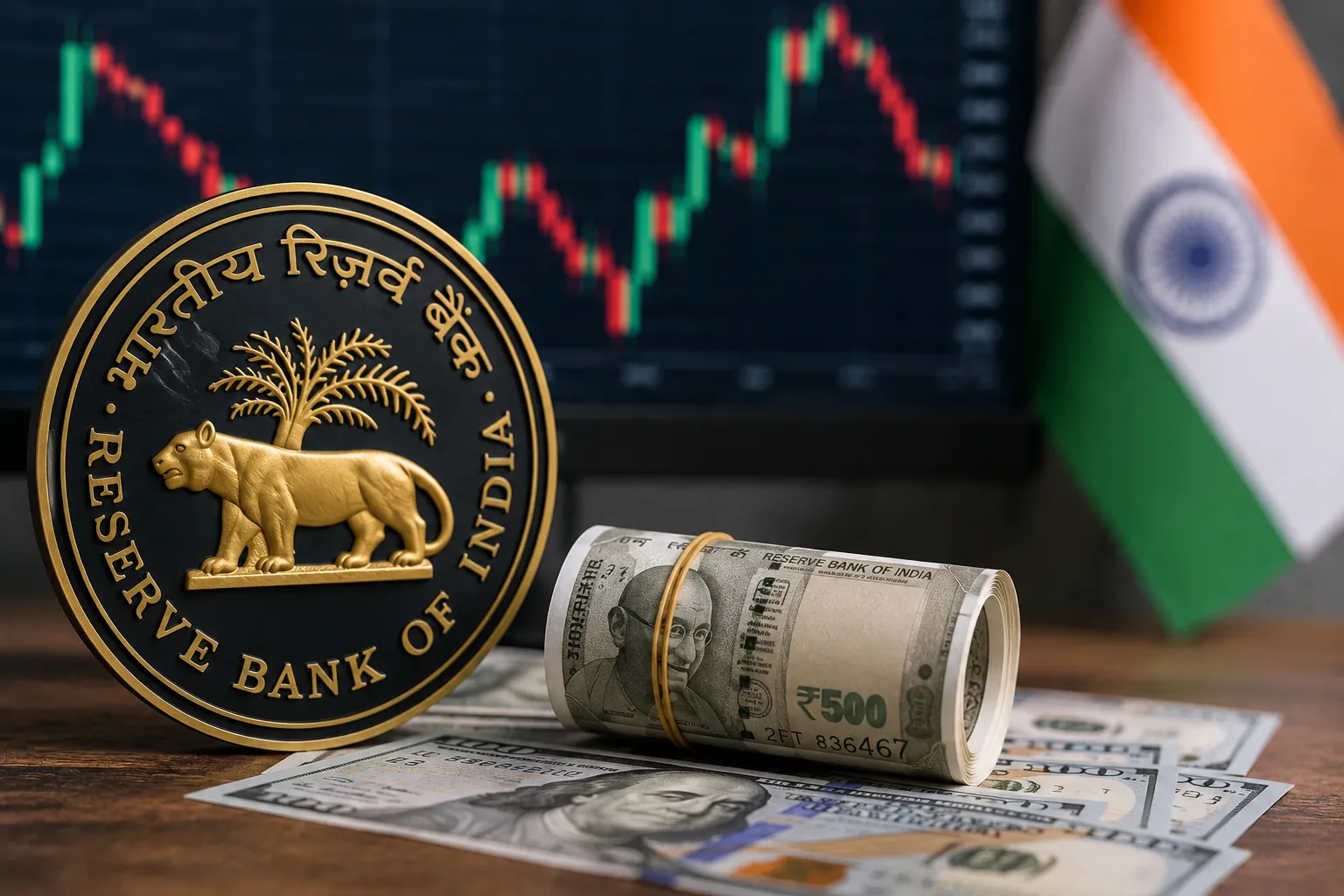
The Reserve Bank of India likely intervened in the foreign exchange market on Monday, August 17, 2026, according to four traders who spoke to Reuters. The rupee slipped in early trading to 95.49 per dollar before its losses were contained. The central bank's action helped limit further damage to the rupee during early trading hours in Mumbai.
The move came as uncertainty surrounding the West Asia conflict kept oil prices elevated and overall market sentiment jittery. Without the reported intervention, traders suggested the currency could have weakened further given the prevailing negative conditions in global financial markets.
State-Run Banks Used to Sell Dollars on RBI's Behalf
The RBI did not directly confirm its presence in the market. However, traders identified dollar sales by state-run banks as a strong signal that the central bank was operating behind the scenes. This is a common method through which the RBI participates in the foreign exchange market without making a direct public announcement.
The dollar sales by state-run banks were sufficient to cap the rupee's losses on the day. Traders interpreted the pattern of these sales as consistent with previous instances of RBI action in the forex market, reinforcing the view that the central bank was the driving force behind the intervention on Monday.
RBI Has Entered Forex Markets Repeatedly This Past Week
Monday's likely intervention was not an isolated event. According to traders, the RBI has intervened in the foreign exchange market frequently over the last week. The repeated presence of the central bank in the market is seen as a deliberate effort to anchor expectations surrounding the rupee's value.
By stepping in regularly, the RBI appears to be sending a signal to market participants that it will not allow excessive or disorderly depreciation of the rupee. Traders interpret this consistent pattern of intervention as an attempt to stabilize the currency during a period of heightened global uncertainty, particularly arising from geopolitical developments in West Asia.

Brent Crude at $88.8 a Barrel Adds to Rupee Pressure
A key factor weighing on the rupee is the rise in global crude oil prices. On the day of the reported intervention, Brent crude oil futures were up 0.3 percent at $88.8 per barrel. India is a major importer of crude oil, and higher oil prices increase the demand for US dollars in the domestic market, putting direct downward pressure on the rupee.
The ongoing conflict in West Asia has been a primary driver of elevated oil prices. The combination of rising energy costs and a strong dollar created a challenging backdrop for the Indian currency. As long as uncertainty around the West Asia conflict continues, oil prices are likely to remain a persistent source of pressure on the rupee and the broader forex market in India.
Rupee Losses Stay Contained Despite Fragile Global Mood
Beyond oil prices, overall market sentiment remained fragile on Monday. The combination of geopolitical risk from West Asia and rising commodity prices created a difficult environment for emerging market currencies, including the rupee. Traders noted that jittery sentiment was making it harder for the rupee to find stable ground without external support from the central bank.
Despite the negative factors at play, the rupee did not experience a sharp or disorderly fall on Monday. The currency's early slip to 95.49 per dollar was noted, but losses were described as contained by traders. This outcome is consistent with the RBI's reported goal of anchoring currency expectations rather than defending a specific exchange rate level.
The events of August 17 reflect the broader challenge facing India's central bank as it navigates a complex global environment marked by geopolitical tensions, rising energy costs, and uncertain financial market conditions. The RBI's repeated interventions over the past week indicate that currency stability remains a clear priority for monetary authorities at this time. Market participants will be watching closely in the sessions ahead to see whether the central bank continues to maintain its presence in the forex market.