
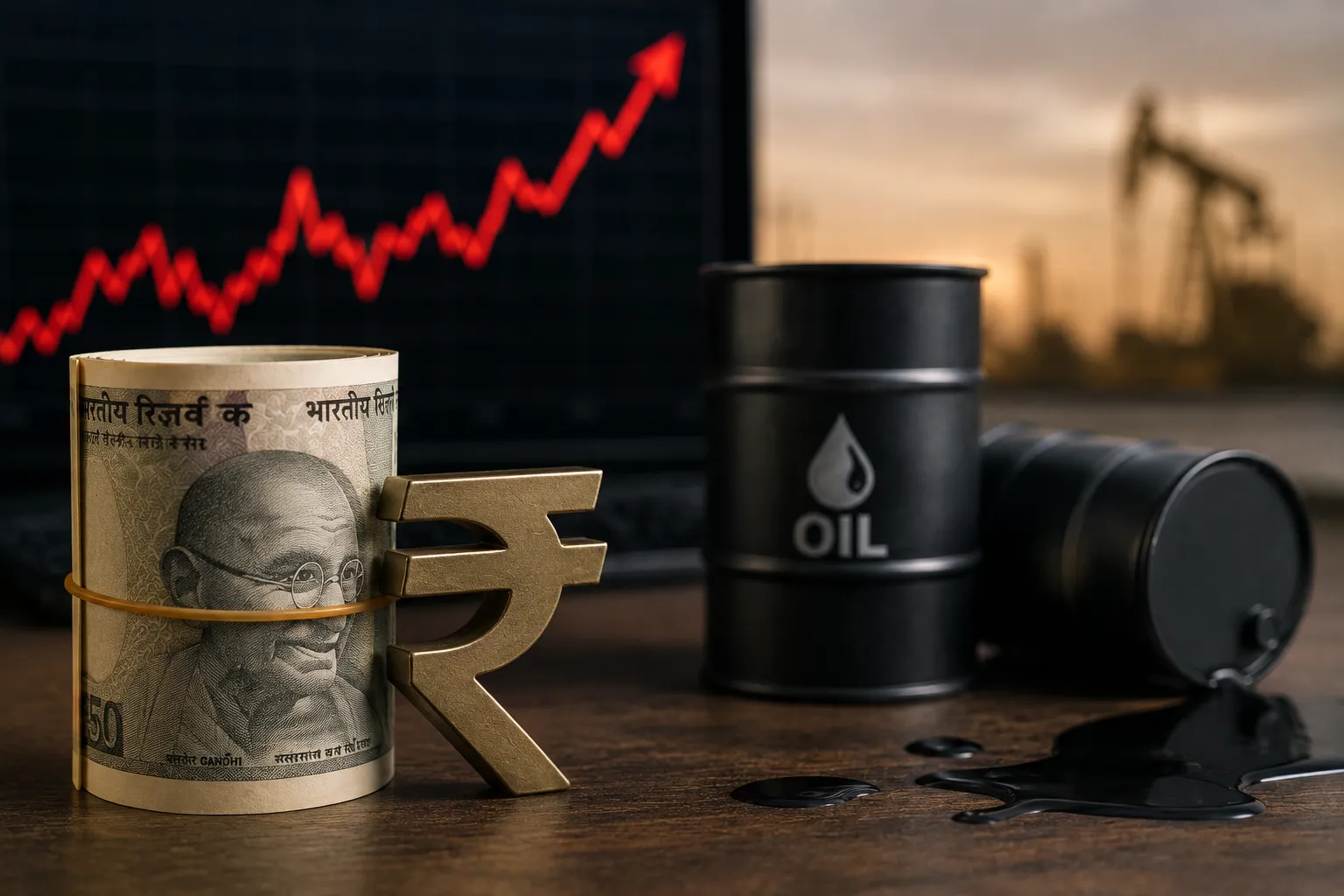
The Indian rupee continued its losing streak during opening trades on Tuesday, August 18, 2026. The currency opened at Rs 95.68 per dollar and recovered only marginally to a session high of Rs 95.65 during the day. The persistent weakness in the rupee reflects mounting pressure from multiple fronts, making it difficult for the domestic currency to find stable footing in the foreign exchange market.
The marginal recovery from the opening level to Rs 95.65 signals that buying interest in the rupee remained extremely limited. Market participants appeared unwilling to take positions in favour of the domestic currency given the weight of negative factors pressing down on it from various directions. The combination of global and domestic headwinds has created a challenging backdrop for the rupee over consecutive trading sessions.
Elevated Crude Oil Prices Push Dollar Demand Higher
Brent crude oil prices hovering near USD 91 per barrel played a significant role in pushing the rupee lower on Tuesday. Higher oil prices directly increase the demand for US dollars from Indian importers, as India is one of the world's largest crude oil importers. This elevated demand for the greenback puts downward pressure on the rupee, making it harder for the domestic currency to stabilise in the near term.
When crude oil prices rise, Indian companies that import oil need to purchase more US dollars to pay for their supplies. This surge in dollar demand from the import side consistently weighs on the rupee. With Brent crude near USD 91 per barrel, the pressure on India's import bill remains substantial, and the foreign exchange market is reflecting this strain through continued weakness in the domestic currency.
RBI's Early Closure of FCN Swap Facility Hits Sentiment
Adding to the pressure on the rupee, the Reserve Bank of India's earlier-than-expected closure of its concessional FCN (B) forex-swap facility raised concerns among market participants about future dollar inflows. The FCN (B) facility had been a tool used to attract foreign currency deposits and support rupee stability in the foreign exchange market.
The premature closure of this facility has created uncertainty around the availability of dollar liquidity in the domestic market. Market participants had relied on this window as a source of dollar supply that could help offset demand-side pressures. With the facility now closed ahead of schedule, the negative sentiment surrounding the Indian rupee has been compounded, leaving traders with fewer tools to anchor their expectations about dollar availability in the near term.

Also Read: RBI Likely Stepped in to Defend Rupee, Traders Say
Global Bond Yields Surge on Energy Inflation Worries
Global bond yields surged on Tuesday driven by concerns that renewed energy inflation could keep interest rates elevated for a longer period. Rising global yields typically push investors toward dollar-denominated assets, reducing the flow of capital into emerging markets like India. This global macroeconomic backdrop further weakened the rupee's position as investors sought the safety and returns offered by higher-yielding developed market bonds.
When global bond yields rise, the relative attractiveness of emerging market assets tends to diminish. Investors who might otherwise park money in Indian equities or debt instruments find developed market bonds more appealing in a high-yield environment. This shift in investor preference reduces the supply of foreign currency flowing into India, adding another layer of downward pressure on the rupee at a time when the currency is already under stress from elevated oil prices and domestic liquidity concerns.
Indian Equities Also Fall Amid Broad Risk-Off Mood
Local equity markets reflected the broader risk-off sentiment on Tuesday. The benchmark BSE Sensex fell 310 points, or 0.4 percent, to trade at 77,417 in early trade. The NSE Nifty index also declined, dropping 65 points, or 0.3 percent, to 24,221. The simultaneous weakness in both the rupee and equity markets underlines the broad-based pressure stemming from global energy prices and rising interest rate expectations affecting Indian financial markets.
The twin decline in the rupee and benchmark equity indices on the same trading session highlights how interconnected currency and stock market movements have become in the current global environment. When foreign investors pull back from emerging market equities due to rising global yields and a stronger dollar, both asset classes tend to suffer simultaneously. Tuesday's market action was a clear reflection of this dynamic, with Indian financial markets feeling the full weight of global headwinds driven by elevated crude oil prices and concerns about prolonged high interest rates worldwide.