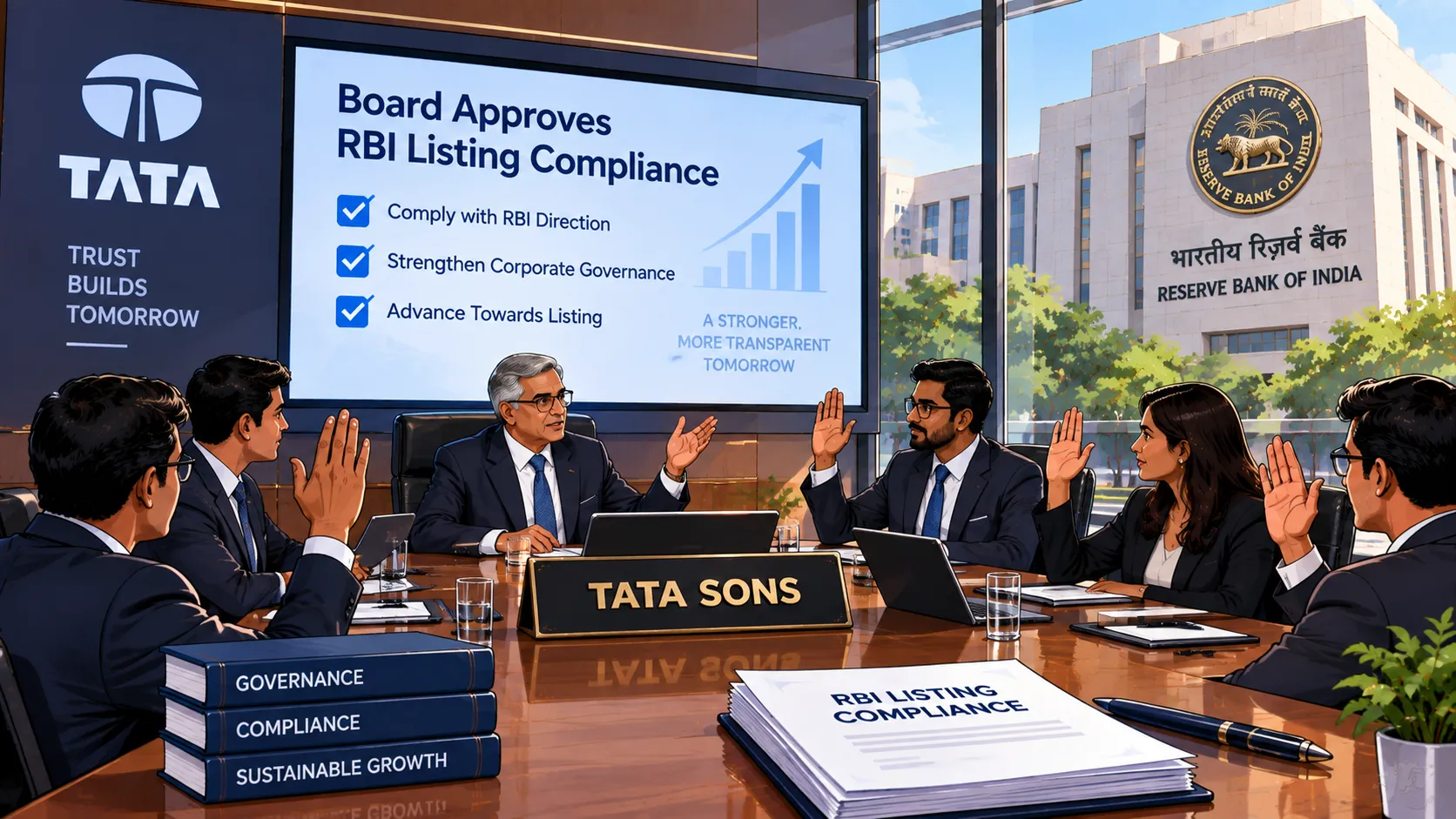
Tata Sons' board voted on September 17 to comply with a Reserve Bank of India direction requiring the holding company to pursue a public listing, a decision opposed by Tata Trusts chairman Noel Tata but backed by second largest shareholder Shapoorji Pallonji Group.
RBI Rejects Tata Sons' Exemption Request
The Reserve Bank of India classified Tata Sons as an Upper Layer non-banking financial company in 2023, a designation that under its Scale-Based Regulatory Framework requires the company to list on the stock exchanges within a set timeframe. Tata Sons had sought to be exempted from that requirement by applying to surrender its Upper Layer NBFC registration after repaying more than Rs 21,000 crore of debt and reducing its balance sheet, a move the company hoped would let it exit the regulatory framework altogether.
The RBI rejected that request and, through a communication dated September 11, directed Tata Sons to comply with the listing requirement instead. Shapoorji Pallonji Group chairman Shapoor Mistry said the central bank had provided full clarity on the matter, framing the listing route as following directly from the regulatory architecture Tata Sons had been placed under.
The Board's September 17 Decision
At a Tata Sons board meeting on September 17, the company's directors voted to extend the tenure of chairman N Chandrasekaran by five years and separately decided to comply with the regulatory direction toward a public listing. Both decisions were opposed by Noel Tata, chairman of Tata Trusts, according to reporting on the board proceedings.
Tata Trusts, which collectively hold about 66 percent of Tata Sons and carry substantial voting power over board decisions, have said publicly that they had not agreed to a listing and that all available options should still be examined following the RBI's communication. The Trusts have also pointed to a unanimous Tata Sons board decision in March 2024 to remain unlisted, along with resolutions passed by two constituent trusts in July 2025 supporting that same unlisted position, as evidence the listing question remains contested internally even after the September 17 vote.
Why the Stake Matters So Much to Shapoor Mistry
The Shapoorji Pallonji Group holds about 18.4 percent of Tata Sons, making the Mistry family the conglomerate's largest minority shareholder. For the group, that stake is both its most valuable asset and one of its most illiquid, since Tata Sons remains a private, unlisted company and the construction focused Shapoorji Pallonji Group itself carries significant debt.
A public listing of Tata Sons would give the Mistry family a route to monetise part of that holding, directly relevant to the SP Group's own efforts to manage its debt load. Mistry has previously argued that a public listing would improve the holding company's transparency and accountability, a position that has gained fresh weight now that the RBI has declined to grant Tata Sons an exemption.

| Stakeholder | Stated Position |
| Reserve Bank of India | Rejected exemption request; directed compliance with listing requirement (September 11) |
| Tata Sons board | Voted September 17 to comply and extend Chandrasekaran's tenure by five years |
| Tata Trusts (about 66% stake) | Opposed the vote; maintains it has not agreed to a listing |
| Shapoorji Pallonji Group (about 18.4% stake) | Backs listing; says stake is illiquid without one |
A Relationship Complicated by History
The dispute unfolds against the backdrop of a long and strained relationship between the two families. Shapoor Mistry and Noel Tata are related by marriage, as Noel Tata's wife is Shapoor Mistry's sister, but relations between the families have remained tense since Cyrus Mistry, Shapoor Mistry's late brother, was removed as Tata Sons chairman in 2016 by Ratan Tata, a decision that triggered a prolonged legal dispute before India's Supreme Court ultimately upheld the ouster.
That history means the current listing question is not simply a matter of regulatory compliance but also touches a long running corporate governance contest over how Tata Sons is run and who ultimately controls key decisions at the group's holding company.
Also Read: SS Retail, Jindal Supreme Soar on Debut; Hero Motors Slips
What Happens From Here
The listing question's final outcome will depend on how the regulatory process unfolds, further decisions by Tata Sons' board and shareholders, and the positions taken by Tata Trusts and the SP Group as talks continue. Tata Trusts' stated view that all available options should still be examined suggests the September 17 board vote may not be the final word on whether, or how quickly, an actual listing takes place.
For minority shareholders and market watchers, a Tata Sons listing would be a landmark event given the holding company's scale and its position at the centre of India's largest business conglomerate, though the timeline remains unclear given the unresolved disagreement between Tata Trusts and the Shapoorji Pallonji Group.