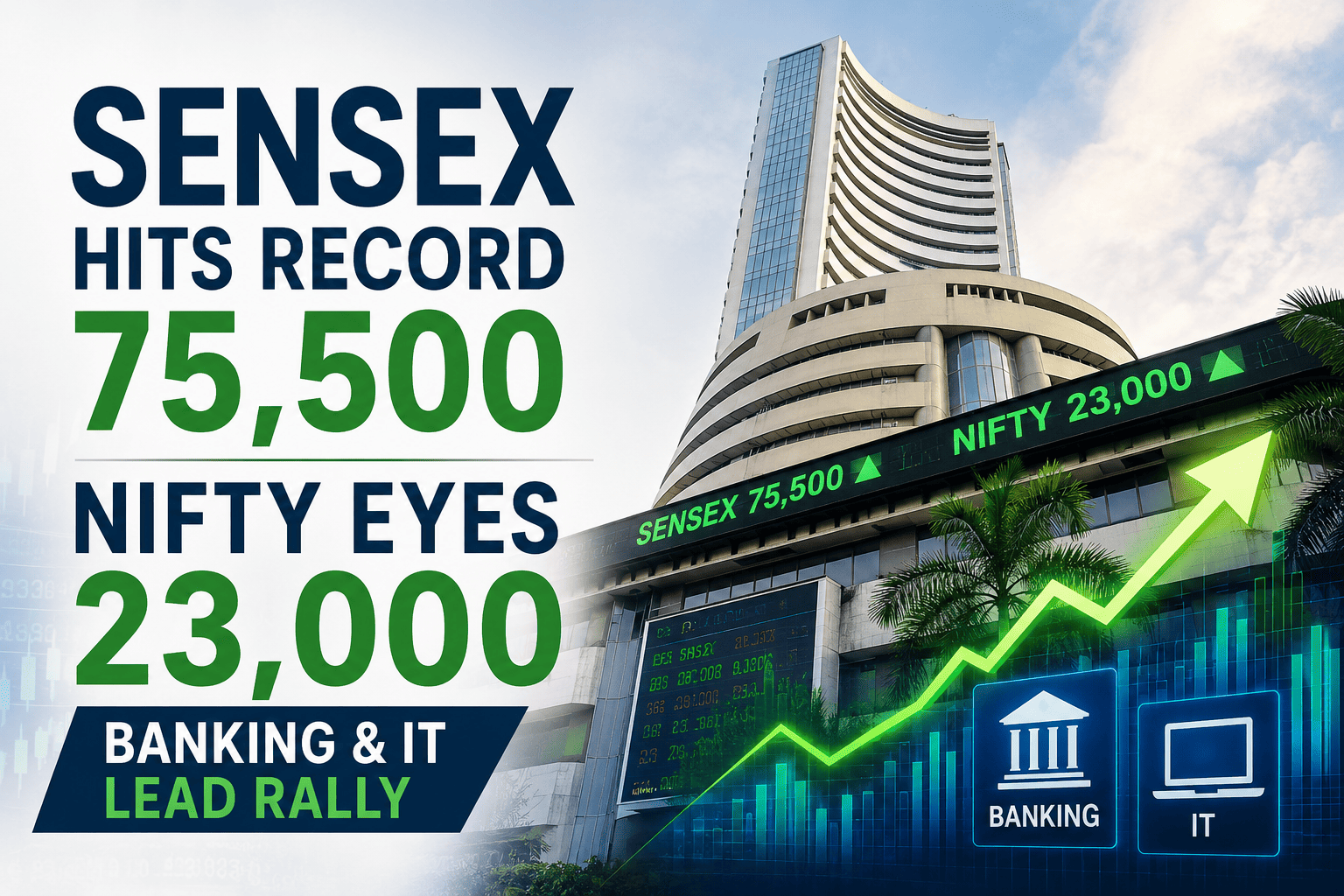
The Indian stock market scripted history on Monday as the benchmark Sensex crossed the 75,500-mark for the first time ever, while the Nifty 50 inched closer to the psychologically significant 23,000 level amid broad-based buying across sectors.
Record-Breaking Rally Powers Dalal Street
Market sentiment remained buoyant from the opening bell, with the 30-stock Sensex touching an intraday high of 75,547.33 points, representing a gain of nearly 1.2% from Friday's close. The broader Nifty 50 index climbed to 22,987 points, just 13 points shy of the coveted 23,000 milestone that market participants have been eagerly awaiting.
Banking heavyweights led the charge with HDFC Bank surging 3.2% to ₹1,847 per share, while ICICI Bank and State Bank of India posted gains of 2.8% and 2.1% respectively. The banking index (Bank Nifty) outperformed with a 2.5% rally, reflecting strong investor confidence in the sector's growth prospects.
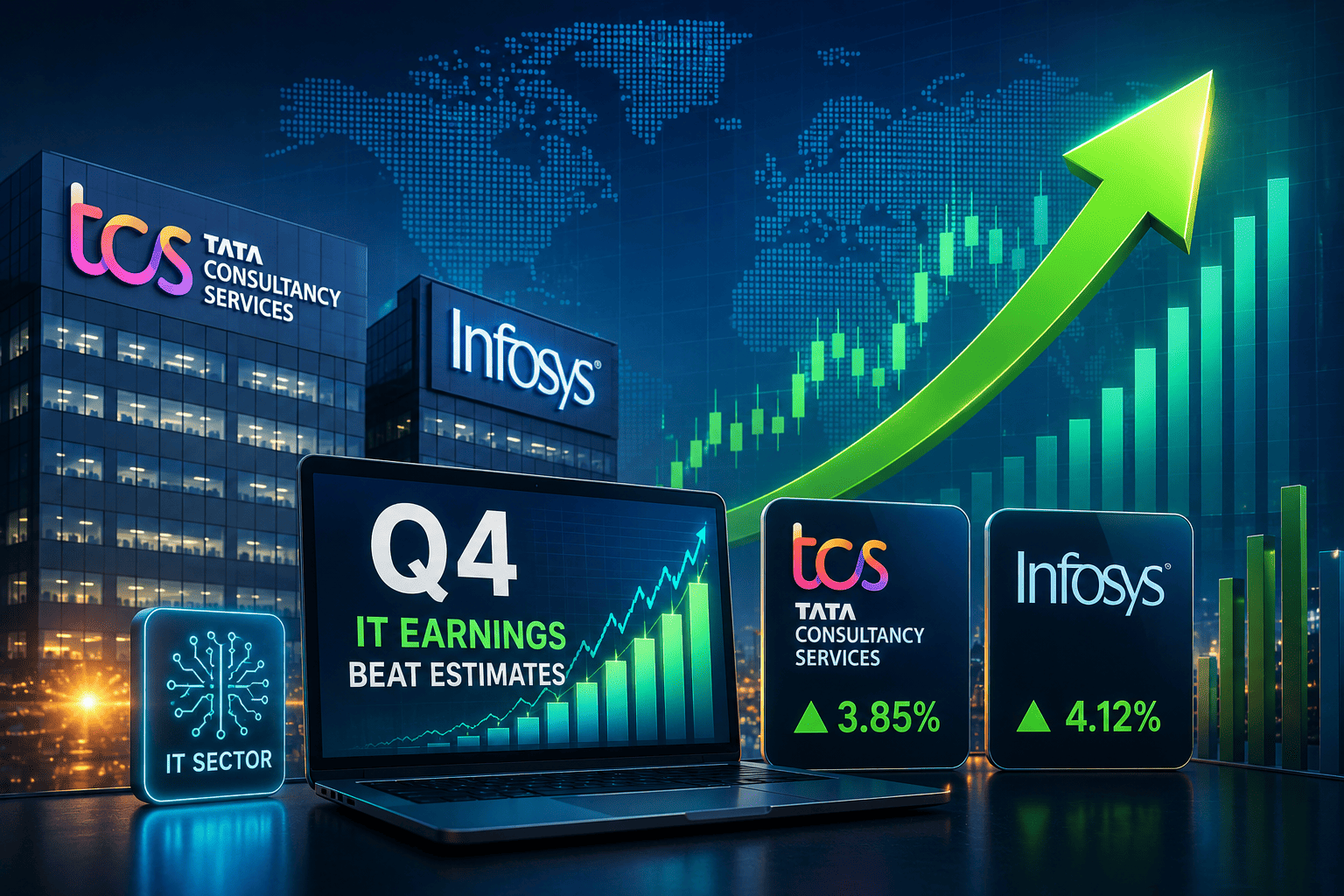
Information technology stocks also participated enthusiastically in the rally. Tata Consultancy Services (TCS) advanced 2.4% to ₹4,156, while Infosys gained 2.1% to ₹1,789. The IT index rose 1.8%, supported by expectations of steady demand from global clients and favorable currency movements.
What's Driving the Banking Market Today?
The banking sector's stellar performance stems from multiple positive factors converging simultaneously. Recent quarterly results have shown robust credit growth, improving asset quality, and stable net interest margins across major lenders. Additionally, the Reserve Bank of India's accommodative stance has created a favorable operating environment for banks.
Domestic institutional investors (DIIs) have emerged as strong supporters, pumping in ₹3,200 crore into equity markets last week alone. This consistent domestic buying has provided crucial support during periods of foreign institutional investor (FII) volatility. For retail investors looking to participate in this momentum, opening a reliable demat account with established brokers has become increasingly important to access these opportunities seamlessly.
Impact on Indian Markets
The record-breaking performance reflects growing confidence in India's economic fundamentals and corporate earnings trajectory. Mid-cap and small-cap indices also participated robustly, with the Nifty Midcap 100 gaining 1.6% and the Smallcap 100 rising 1.4%. This broad-based participation indicates healthy market depth beyond just large-cap stocks.
Market capitalization of BSE-listed companies surged past ₹425 lakh crore, creating substantial wealth for investors. The rally has been supported by stable crude oil prices around $82 per barrel and a relatively stable rupee trading near 83.20 against the dollar.
Foreign portfolio investors have shown renewed interest in Indian equities, with net inflows of ₹1,850 crore over the past week. This reversal from earlier selling pressure has provided additional momentum to the ongoing rally.
Stocks and Sectors in Focus
Beyond banking and IT, several other sectors contributed to the broad-based rally. Auto stocks gained traction with Maruti Suzuki up 1.8% and Bajaj Auto rising 2.3%. The pharmaceutical sector also showed strength, with Dr. Reddy's Laboratories and Sun Pharma posting gains of 1.5% and 1.7% respectively.
Consumer goods companies like Hindustan Unilever and ITC advanced 1.2% and 1.9% respectively, reflecting steady domestic demand trends. Metal stocks joined the party with Tata Steel and JSW Steel gaining over 2% each on expectations of sustained infrastructure spending.
For active traders, having access to a comprehensive trading platform with real-time data and advanced charting tools has become crucial to capitalize on such volatile market movements effectively.
What Should Investors Do?
While the current momentum appears strong, investors should exercise caution at these elevated levels. Market veterans suggest considering partial profit-booking in stocks that have delivered substantial gains over recent months. The upcoming RBI monetary policy review later this month could provide fresh directional cues.
Long-term investors focused on stock investment strategies should consider maintaining diversified portfolios across sectors and market capitalizations. Defensive sectors like FMCG and pharmaceuticals could provide stability if market volatility increases.
Technical analysts suggest that sustaining above 75,500 for Sensex and crossing 23,000 for Nifty could open doors for further upside. However, any global headwinds or unexpected domestic policy changes could trigger profit-booking at these record levels.
Risk Factors to Monitor
Despite the positive momentum, several risks warrant attention. Global central bank policies, particularly the US Federal Reserve's stance, could impact foreign fund flows. Additionally, any escalation in geopolitical tensions or unexpected inflation surprises could dampen sentiment.
Valuation concerns are also emerging as price-to-earnings ratios of several stocks have stretched beyond historical averages. Investors should remain selective and focus on companies with strong fundamentals and reasonable valuations.
Key Takeaways
This article is for informational purposes only and does not constitute investment advice.