
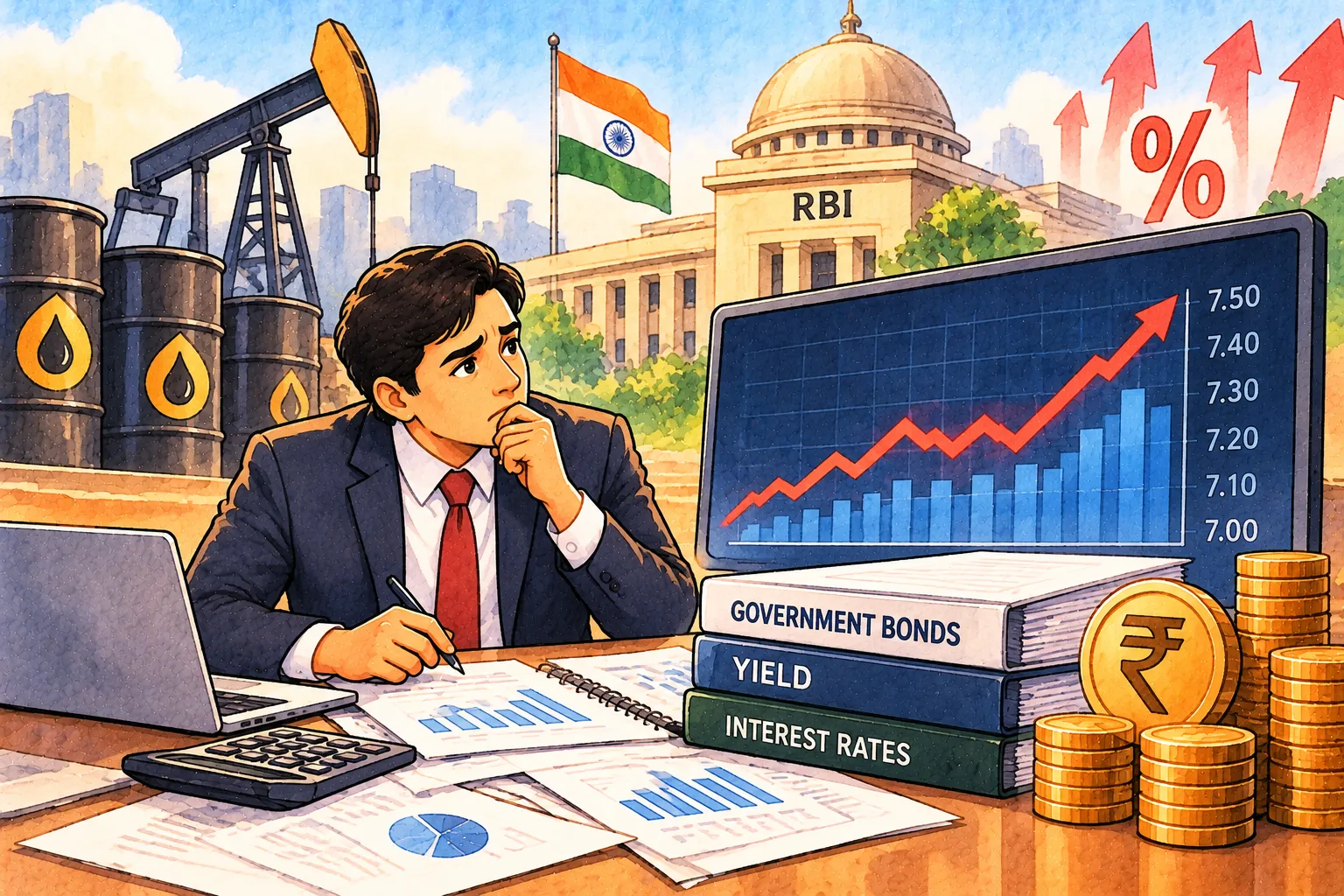
India’s 10-year government bond yield rose to about 7.5% on October 29, its highest in more than three years, as high oil prices and bets on further RBI rate hikes weighed on bonds and value buyers began to step in.
Yield Climbs for an 11th Straight Week
The yield on India’s benchmark 10-year government bond rose to around 7.5% on Thursday, October 29, extending a long climb. One market report put the yield at 7.498%, its eleventh consecutive weekly increase, while another showed it at about 7.465% earlier in the week. Either way, the yield is near its highest level since March 2023.
Bond yields and prices move in opposite directions. When yields rise, the market price of existing bonds falls, and when yields fall, prices rise. A rising yield also signals that investors are demanding more compensation to lend to the government.
| Indicator | Reported Level |
| 10-year yield | About 7.47% to 7.50% |
| Highest since | March 2023 |
| Weekly trend | Eleven straight weekly rises |
| Repo rate | 5.50% after a 25 basis point hike |
| Rate hikes priced over 12 months | Slightly more than 100 basis points |
Why Yields Are Rising
The main driver is oil. India imports most of its crude, so a sustained rise in prices tends to lift inflation and widen the external deficit. Brent crude traded above $115 a barrel on October 28 after a reported attack on a Saudi refinery, according to Reuters, and has been elevated for weeks.
That feeds into rate expectations. The Reserve Bank of India recently raised its repo rate by 25 basis points to 5.50% and moved to a stance of calibrated tightening. Markets have priced in slightly more than 100 basis points of rate increases over the next 12 months, and some participants expect a 50 basis point hike in December. A basis point is one hundredth of a percentage point.
Tighter liquidity in the banking system has added to the selling pressure on government bonds. Heavy government borrowing also matters, since a steady supply of new bonds requires buyers at each weekly auction.
The Path to 7.5%
The rise has been steady. In mid-October, Reuters reported that the 10-year yield jumped 9 basis points in a single session, its biggest one-day rise in more than six months, and closed at 7.3857%, the highest closing level in three years. That move came after consumer price inflation for September accelerated to 5.54%, while Brent crude held above $105 a barrel.
At that time, state-run banks were reported to be buying bonds, which gave some traders confidence that yields would not rise sharply. Since then, the yield has risen by roughly another 10 basis points.

Buyers Start to See Value
Some investors now see value in bonds. Reports said certain large insurers have indicated that current yields may offer an opportunity for medium-term investment, since they believe prices already reflect a significant part of the expected inflation risk.
One assessment suggested that if this more moderate view holds, the 10-year yield could settle in a range of 7.15% to 7.45% over the next year, instead of continuing to rise. That is a forecast and not a certainty. Other participants warn that persistent inflation, volatile oil and more aggressive tightening than currently expected could push yields higher.
What Higher Yields Mean for Borrowers and Investors
A higher benchmark yield feeds into borrowing costs across the economy. It raises what the government pays on new debt, and it tends to push up rates for companies that borrow through bonds. Banks may also adjust lending rates over time, although loan pricing depends on many factors.
For equity investors, higher bond yields can change the comparison between safe returns and riskier stocks. When government bonds offer around 7.5%, some investors may weigh shifting money toward debt. Whether that happens depends on each investor’s goals and risk tolerance.
Also Read: Adani Ports Q2 Profit Rises 18% to ₹3,682 Crore, Raises FY27 Revenue, EBITDA and Capex Guidance
What to Watch Next
The main triggers are oil prices, the monthly inflation reading, the Reserve Bank of India’s next policy meeting and the pace of government bond supply. If oil eases, pressure on yields could fade. If crude stays high, markets may keep pricing in more rate increases.
The figures here describe market levels reported on October 28 and 29, 2026 and may change through the day. They are not a forecast.