Nestlé's global CEO has asked India to consult manufacturers while finalising front-of-pack health warning labels for packaged foods, a request published just as the Supreme Court's deadline for a government decision on the rules lapses.
Nestlé's chief makes India's food-label debate personal
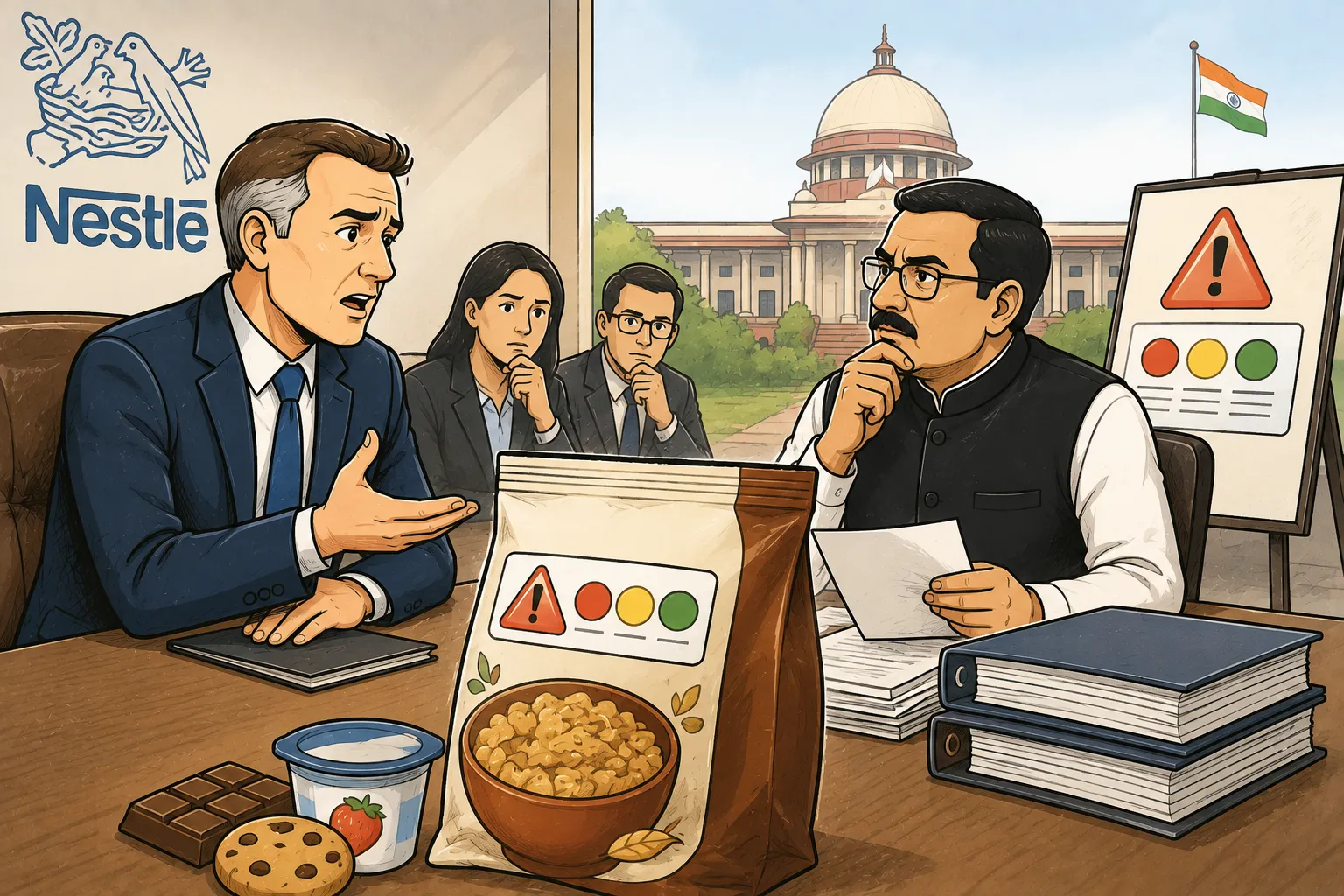
Nestlé CEO Philipp Navratil told The Economic Times in an interview published on August 27, 2026 that the company backs front-of-pack labelling for products high in sugar, salt and fat, but wants manufacturers included in the process. "It's always good to have a voice from companies; there might be different views on the subject," he said. "We can be part of the debate in terms of making sure it's scientifically done."
Reuters carried the same remarks the same day, marking the first time in this round of the debate that a global FMCG chief executive has taken a public, on-record position rather than letting industry bodies speak on the issue.
Front-of-pack warning labels typically use prominent symbols, colours or plain-language text on a package's most visible side to flag products that cross set thresholds for sugar, salt or fat making the information far easier for shoppers to spot than the fine print on a standard back-of-pack nutrition table.
A Supreme Court deadline hangs over the timing
The statement lands at a pointed moment. India's Supreme Court, hearing a public interest litigation, had by order dated February 10, 2026 directed the Food Safety and Standards Authority of India (FSSAI) to seriously consider mandatory front-of-pack warning labels for foods high in sugar, salt and saturated fat.
On August 13, 2026, the court went further, telling the Centre and FSSAI this was their "last chance" and giving them a final two-week window to decide on the framework. That window lapses right around today, with the matter next listed for hearing on September 10, 2026. Nestlé's intervention arrives just as regulators face pressure to show they have finally moved.
How India's labelling rules stalled for years
FSSAI first floated draft front-of-pack labelling regulations in 2018, followed by a proposal for a five-star nutrition rating system in 2022. Neither has been finalised. A separate, stricter labelling proposal was reportedly dropped by the government in March 2026 after opposition from companies including Coca-Cola and industry groups representing companies such as Nestlé, according to Reuters.
FSSAI has notified other, narrower changes in the interim. Its Food Safety and Standards (Labelling and Display) First Amendment Regulations, 2026, issued on March 30, 2026, take effect from July 1, 2027, but these cover separate labelling and display requirements, not the core front-of-pack warning-label framework for high-sugar, high-salt and high-fat foods that remains stuck in consultation.

India's packaged food and beverage market is valued at more than $100 billion, and industry estimates suggest close to 80% of products sold in the category could be classified as high in fat, sugar or salt a scale that explains why the eventual shape of the rules matters to both public health advocates and the companies that would have to redesign packaging.
Health advocates push back on industry's request
Not everyone welcomes Nestlé's call for a seat at the table. Dr. Arun Gupta, convenor of Nutrition Advocacy in Public Interest, described the request as "a clear attempt to weaken public health policy." He pointed out that Nestlé and other companies have used front-of-pack warning labels in European markets since 2013, even as their trade bodies opposed similar rules in India.
That contrast, global compliance paired with domestic pushback has become a central argument for advocates who want FSSAI to move ahead without further industry input. It also underscores why the timing of Navratil's remarks, just as the court's patience runs out, has drawn attention beyond the interview itself.
Also Read: Tata Power Falls After Losing Singapore Arbitration Case
Why the outcome matters beyond this news cycle
No stock-price reaction or trading impact tied to this development has been reported, and this remains a regulatory and reputational story rather than a market-moving one for now. Nestlé India Limited, the group's Indian arm, is listed on both the NSE and BSE, making it one of the companies with a direct stake in how the eventual rules are framed.
Once FSSAI does finalise a front-of-pack warning-label framework whether shaped by further consultation or delivered under continued judicial pressure packaged food companies operating in India would need to redesign labels and disclosures to comply. For a sector this large, even a modestly designed mandatory label carries real operational weight, which is why both the format of the eventual rule and the process used to arrive at it are being watched closely as the Supreme Court's September hearing approaches.
Nestlé India last traded around ₹1,451–1,455 on the NSE and BSE as of August 26, 2026, a level that reflects broader market conditions rather than any reaction to this specific regulatory development. As things stand, the labelling debate remains a policy and compliance story to track rather than a market-moving one.