
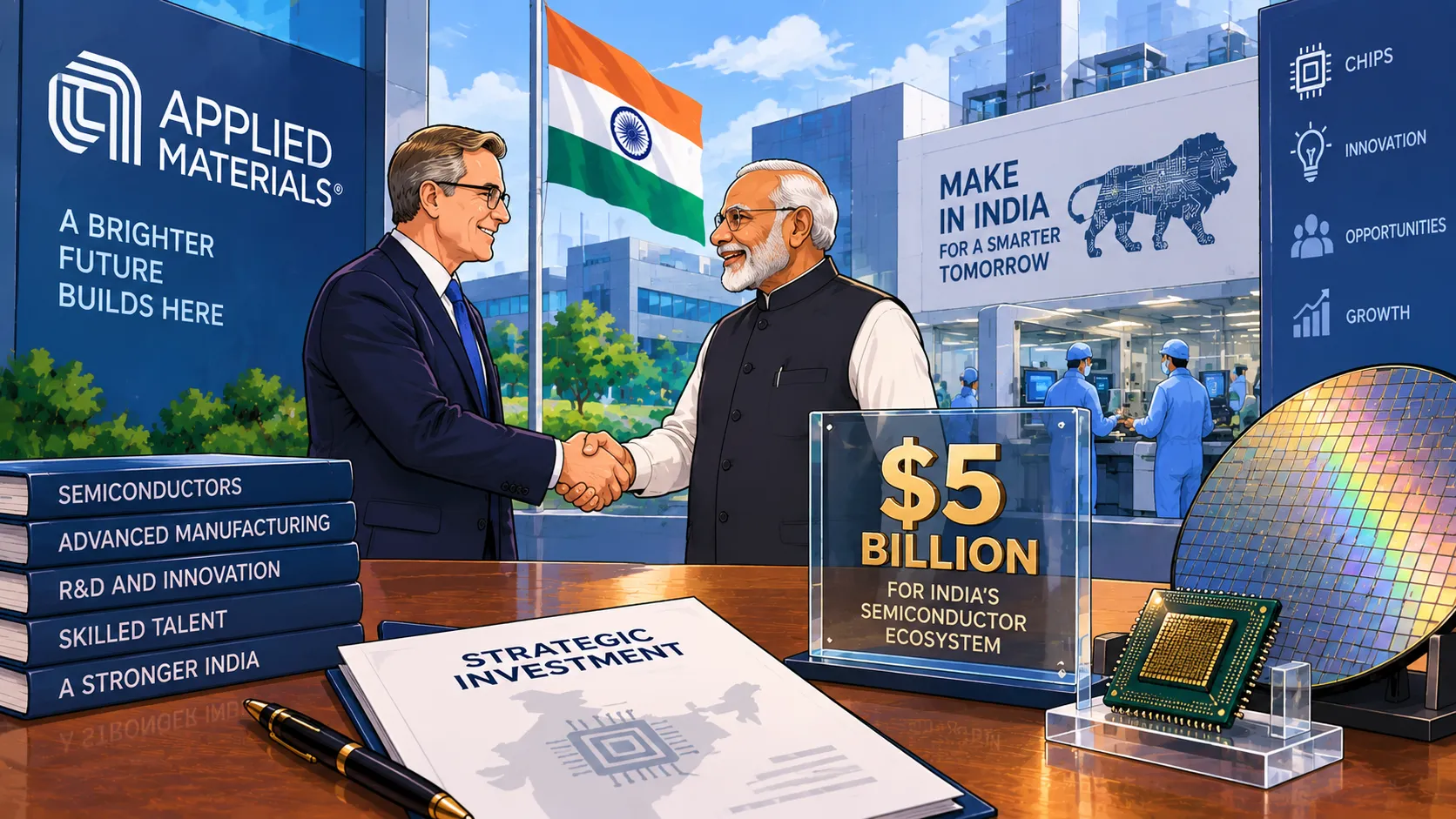
Applied Materials, one of the world's largest semiconductor equipment makers, said on Thursday it will invest $5 billion in India over the next decade, adding to a string of chip-industry commitments announced at the country's flagship semiconductor conference.
The Announcement
Made at SEMICON India, a three-day New Delhi conference drawing 600+ companies and representatives from 52 countries. The company said the investment will focus on research, supply chain scale-up and workforce growth, no year-by-year breakdown was disclosed.
India's Semiconductor Push: the Numbers
- Projected semiconductor consumption: $100-110 billion by 2030, up from $45-50 billion in 2025 (government estimates)
- Committed incentive funding to date: over $21 billion across two programmes
- Projects approved under the incentive programme: 12, over five years
- Chip-packaging plants in commercial production: 3, including one run by Micron Technology
Where the Buildout Actually Stands
Despite the investment headlines, India's push has yet to produce a single chip from a large-scale fabrication plant. The programme's marquee project, a $10 billion Tata Electronics fab in Gujarat has seen commercial production delayed by nearly two years.

Other Announcements at the Same Event
- Tata Electronics: to sign 16 partnership agreements at the conference
- Micron Technology (CEO): plans to scale up assembly/testing operations in India next year
- Infineon Technologies (CEO): described India as a market of "tremendous importance" for chips
- PM Narendra Modi: positioned India as a "trusted partner" for chipmakers diversifying from Taiwan/China amid US-China export restrictions
Also Read: Peak XV Sells 1.46% Groww Stake for ₹1,756 Crore
What It Signals for Investors
Applied Materials' pledge adds to the scale of committed foreign capital in India's chip ambitions, but the gap between announced investment and actual fabrication output remains the sector's central unresolved question. Equipment makers like Applied Materials would only deploy capital once fab capacity is actually built, making this a longer-dated bet on India's chip ecosystem rather than a near-term revenue event.