The Sensex fell as much as 762 points and the Nifty hit 22,559 in early trade on October 28 as Brent topped $115 after a reported Saudi refinery attack. IT and heavyweight stocks led losses.
A Sharp Gap-Down Opening
Indian equity benchmarks opened lower on Wednesday, October 28, and slid further in the first minutes of trading. According to Upstox, the Sensex dropped as much as 762 points and the Nifty 50 touched an intraday low of 22,559. Business Standard’s live blog said the Sensex opened at 73,253.44, while the Nifty started 0.31% lower at 22,678 after a weak pre-open.
As of 9:21 am, the Sensex was down 706 points, or 1%, at 72,892, and the Nifty had dropped 137 points to 22,610, Upstox reported. Those moves imply a previous close of roughly 73,600 for the Sensex and about 22,750 for the Nifty. Another report put the early Sensex loss at 712.74 points, with the Nifty near 22,550.
| Index | Early Level (about 9:21 am) | Early Change | Intraday Low Reported |
| Sensex | 72,892 | Down 706 points (1%) | Down as much as 762 points |
| Nifty 50 | 22,610 | Down 137 points | 22,559 |
Why Markets Fell
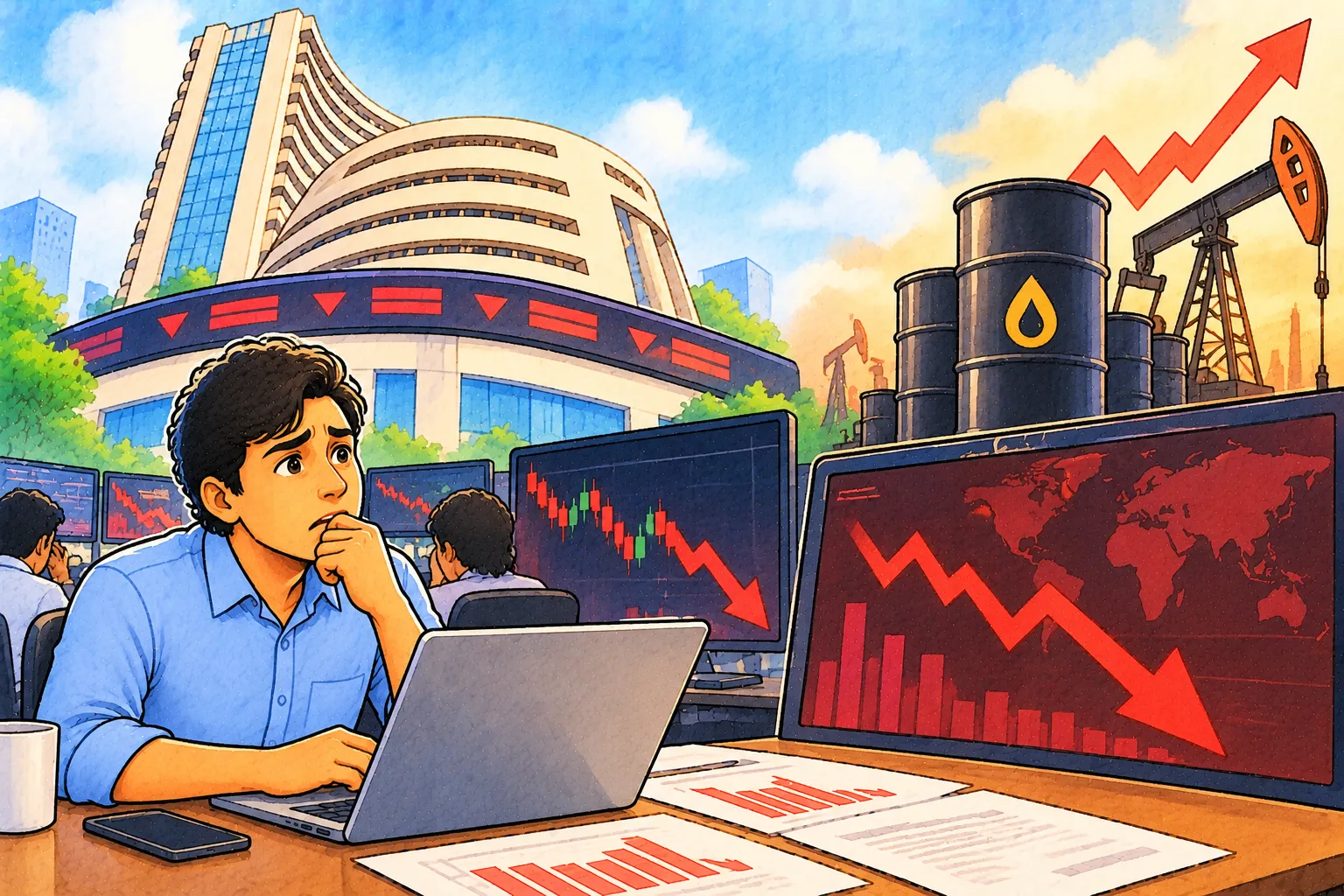
The main trigger was crude oil. Brent crude traded above $115 a barrel after Yemen’s Houthis said they had hit Saudi Arabia’s biggest oil refinery with a missile. Saudi authorities did not immediately confirm the strike. The oil move raised worries about supply and about higher inflation, according to NewsBytes.
Business Standard’s live blog noted that the GIFT Nifty, an early indicator for Indian markets traded in Gujarat, had fallen about 150 points as oil crossed $115. India relies heavily on imported crude, so a rise in oil prices tends to be read as negative for the economy and for corporate costs.
Heavyweights and IT Stocks Lead Losses
Upstox said the declines were led by Infosys, HDFC Bank, ICICI Bank, Tata Consultancy Services, Reliance Industries, Bharti Airtel, ITC and HCL Technologies. The list shows the selling was broad, with large private banks, IT companies and consumer and telecom heavyweights all lower.
IT stocks were singled out as a drag. NewsBytes described a technology slump as investors waited for signals from the US Federal Reserve about inflation. Information technology had been the one sector drawing strong foreign inflows in the first half of October, so weakness in the sector stood out.
Where Analysts See Support and Resistance
Analysts quoted in the coverage said the Nifty needs to move above 22,700 for the market to bounce back. Separately, Vinay Rajani of HDFC Securities said a sustained move above 22,800 would be needed for a rally, according to Business Standard.

These are technical views on price levels and are not forecasts. A level that matters on a chart is one where the index has previously paused or reversed, so traders watch whether the index can stay above or below it.
The Run of Weak Sessions
The fall extends a weak stretch. On Thursday, October 22, the Nifty closed at 22,687.65 and the Sensex at 73,249.39 after a 460-point decline, both lower for a third straight session. The Nifty was also reported above 22,700 in trade on Monday, October 26, before today’s fall.
Whether the index closes below 22,600 will depend on how oil and global cues move through the session.
Jio Listing in the Background
Jio Platforms was due to list on October 28, and its debut drew attention even as the market fell. The stock listed at ₹1,358, a 21.36% premium to its issue price of ₹1,119, according to Upstox. A strong listing does not by itself offset a weak index, but it shows investor appetite for new issues remains.
What to Watch Through the Day
The key variables are crude oil, which is reacting to reports from Saudi Arabia, and global cues, including the Fed’s signals on inflation. Investors will also follow whether IT stocks stabilise and whether the Nifty can reclaim the 22,700 level.
The figures here describe early trade on October 28, 2026, and may change as the session continues. They are not a prediction of how the market will close.